How Stackable Food Containers Help Reduce Shipping Costs for Importers
When importing disposable food packaging, product price is only one part of the total purchasing cost.
For food packaging distributors, wholesalers and importers, transportation can represent a significant part of the final landed cost. Two food containers with similar material and capacity may have very different logistics costs depending on how efficiently they stack, how many sets fit into one carton, and how many cartons can be loaded into a shipping container.
This is why professional buyers should look beyond the unit price when comparing suppliers.
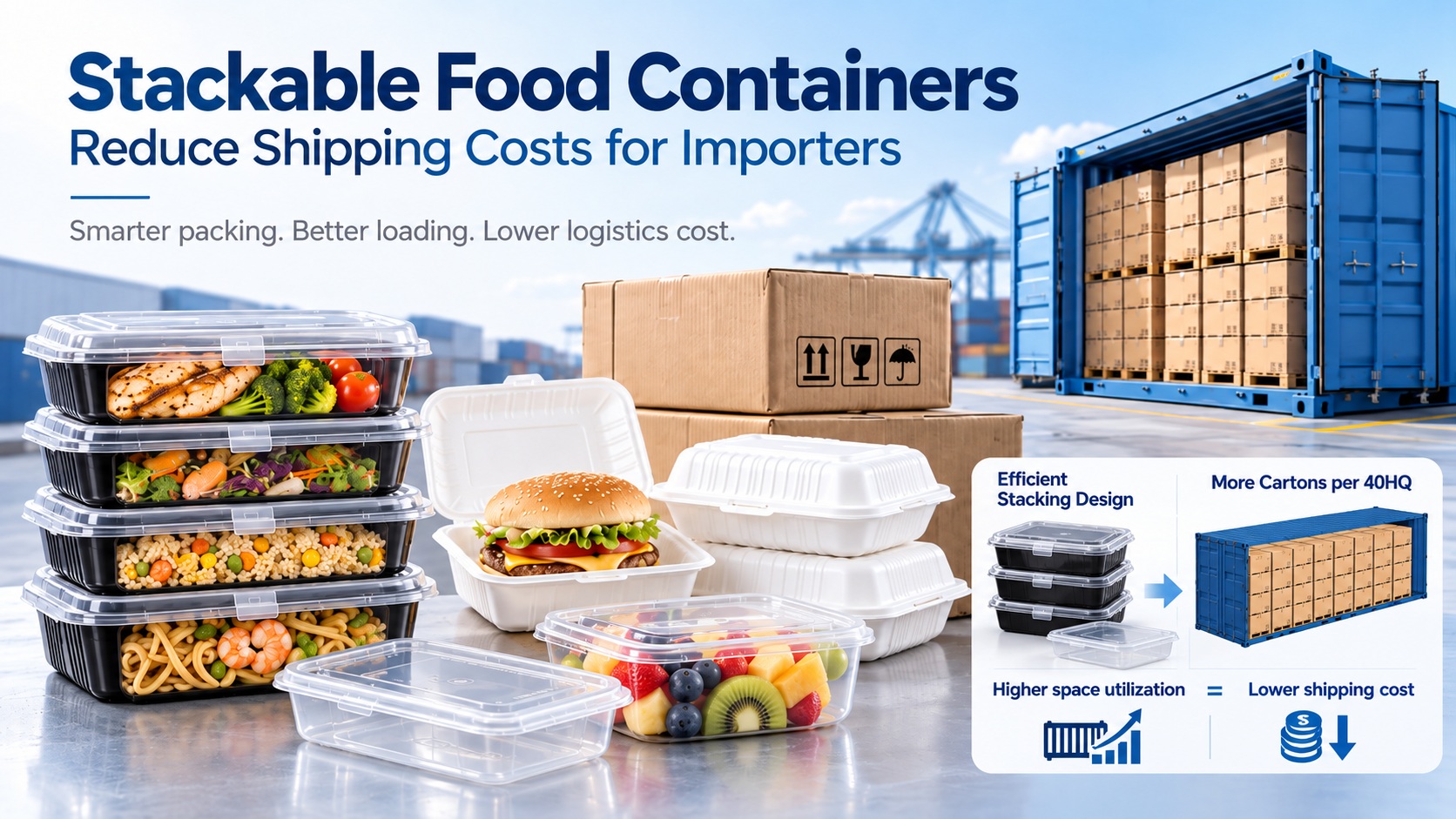
A well-designed stackable food container can improve carton packing efficiency, warehouse storage and container loading, helping buyers reduce the transportation cost allocated to each piece.
Why Shipping Efficiency Matters When Buying Food Containers
Disposable food containers are relatively lightweight but can occupy a large amount of space.
Unlike heavy industrial products, a container shipment of food packaging often reaches its volume limit before reaching its maximum weight.
This means that the amount of usable space inside a 20GP or 40HQ shipping container becomes extremely important.
If containers have a high stacking height or inefficient shape, fewer pieces can be packed into each carton. Larger cartons then occupy more container space, which may reduce the total quantity that can be shipped in one container.
For importers purchasing hundreds of thousands of food containers, even a small improvement in packing density can make a meaningful difference to logistics efficiency.
What Is a Stackable Food Container?
A stackable food container is designed so that multiple empty containers can fit closely together during storage and transportation.
Instead of simply placing one complete container on top of another, the bases can usually nest partially inside each other before use.
The same principle can also apply to lids.
The objective is simple: reduce the vertical space required by a large number of containers.
For food packaging manufacturers, good stackability requires balancing several factors.
The container must still separate easily during packing operations, maintain the required strength, fit its matching lid correctly and provide enough space between nested containers so they do not become difficult to separate.
Therefore, the lowest possible stacking height is not always automatically the best design. The structure must remain practical for actual foodservice use.
Stacking Height Can Affect Container Loading
Imagine two food containers with similar dimensions and capacity.
If Container A requires more vertical space when 100 bases are stacked together, while Container B nests more closely, Container B may require a smaller carton.
When thousands of cartons are shipped, this difference becomes much more significant.
Smaller carton volume can potentially allow more cartons to be loaded into the same 40HQ container.
For importers, this can reduce the amount of ocean freight allocated to each individual food container.
This is especially important for high-volume products such as takeaway containers, deli containers, fruit packaging and meal preparation containers.
Carton Size Is as Important as Product Size
When sourcing wholesale food packaging, buyers often focus on the dimensions of the food container itself.
However, professional importers should also request the outer carton dimensions.
Three measurements are particularly important: carton length, carton width and carton height.
These dimensions determine the cubic volume occupied by each carton.
A product may have an attractive unit price, but if its packaging configuration requires significantly larger cartons, the final landed cost can become less competitive after international transportation is included.
For this reason, Tianjin Huanyu Zhongteng provides carton dimensions and packing quantities for many of our food container models so wholesale buyers can evaluate transportation requirements before placing bulk orders.
A Practical Example: 500ml vs 750ml PP Food Containers
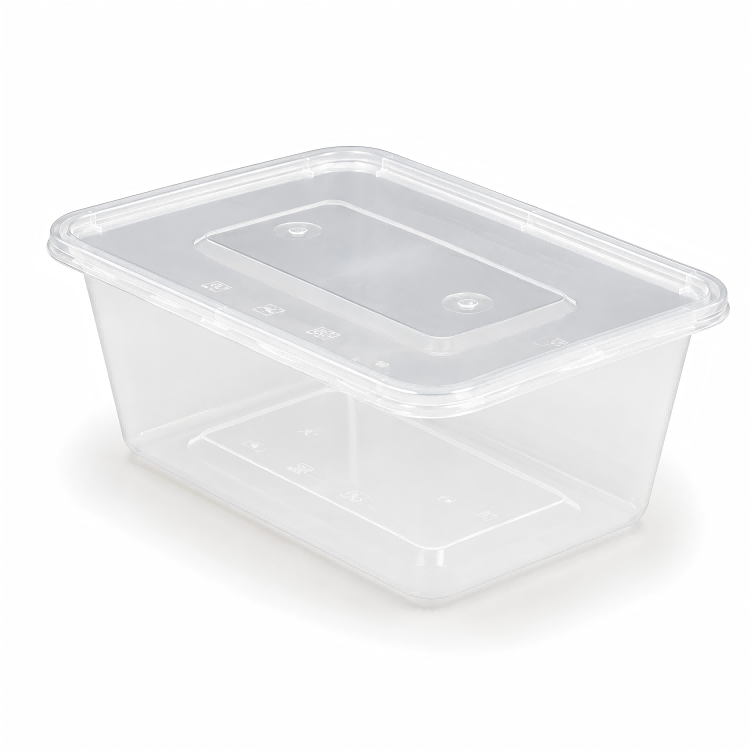
A useful example can be found in our MG-F series of clear rectangular PP food containers.
The MG-F500 and MG-F750 use the same basic rectangular footprint of approximately 17.2 × 11.8 cm.
The 500ml version has a product height of approximately 4 cm, while the 750ml version increases the depth to approximately 5.4 cm.
Both current packing configurations contain 500 sets per carton.
For the MG-F500, the current carton size is approximately 0.53 × 0.26 × 0.44 m, with an estimated loading quantity of approximately 1,122 cartons in a 40HQ container.
For the deeper MG-F750, the current carton size is approximately 0.53 × 0.26 × 0.48 m, with an estimated loading quantity of approximately 1,028 cartons in a 40HQ container.
This does not mean that one capacity is better than the other. They are designed for different portion requirements.
It simply demonstrates why buyers should consider container depth, stacking height, carton dimensions and container loading together when calculating procurement costs.
Do Not Compare Food Containers Only by Price Per Piece
One of the most common mistakes in international food packaging sourcing is comparing quotations only according to the FOB unit price.
For example, Supplier A may offer a slightly lower price per container.
However, if Supplier A's product requires considerably more shipping space, the buyer may receive fewer containers in each 40HQ shipment.
Supplier B could have a slightly higher FOB price but a better stacking structure and more efficient carton configuration.
After ocean freight, destination charges, inland transport and warehousing are considered, Supplier B could potentially provide a more competitive landed cost per piece.
This is why professional buyers should evaluate the complete supply chain instead of focusing on one number.
What Information Should Importers Ask Their Supplier For?
When evaluating a disposable food packaging supplier, buyers should obtain enough information to calculate the complete purchasing and transportation cost.
Important information includes the product dimensions, capacity, material, product weight, quantity per carton, carton dimensions, gross and net carton weight, estimated container loading quantity and available OEM packaging options.
Buyers who order full containers should pay particular attention to estimated 20GP and 40HQ loading quantities.
For mixed-container orders, product dimensions and carton sizes become even more important because different SKUs must be combined efficiently.
Round vs Rectangular Containers: Does Shape Affect Shipping?
Both round and rectangular food containers can be designed for efficient bulk transportation.
Rectangular containers can make efficient use of carton footprint because their straight sides allow products and cartons to be arranged systematically.
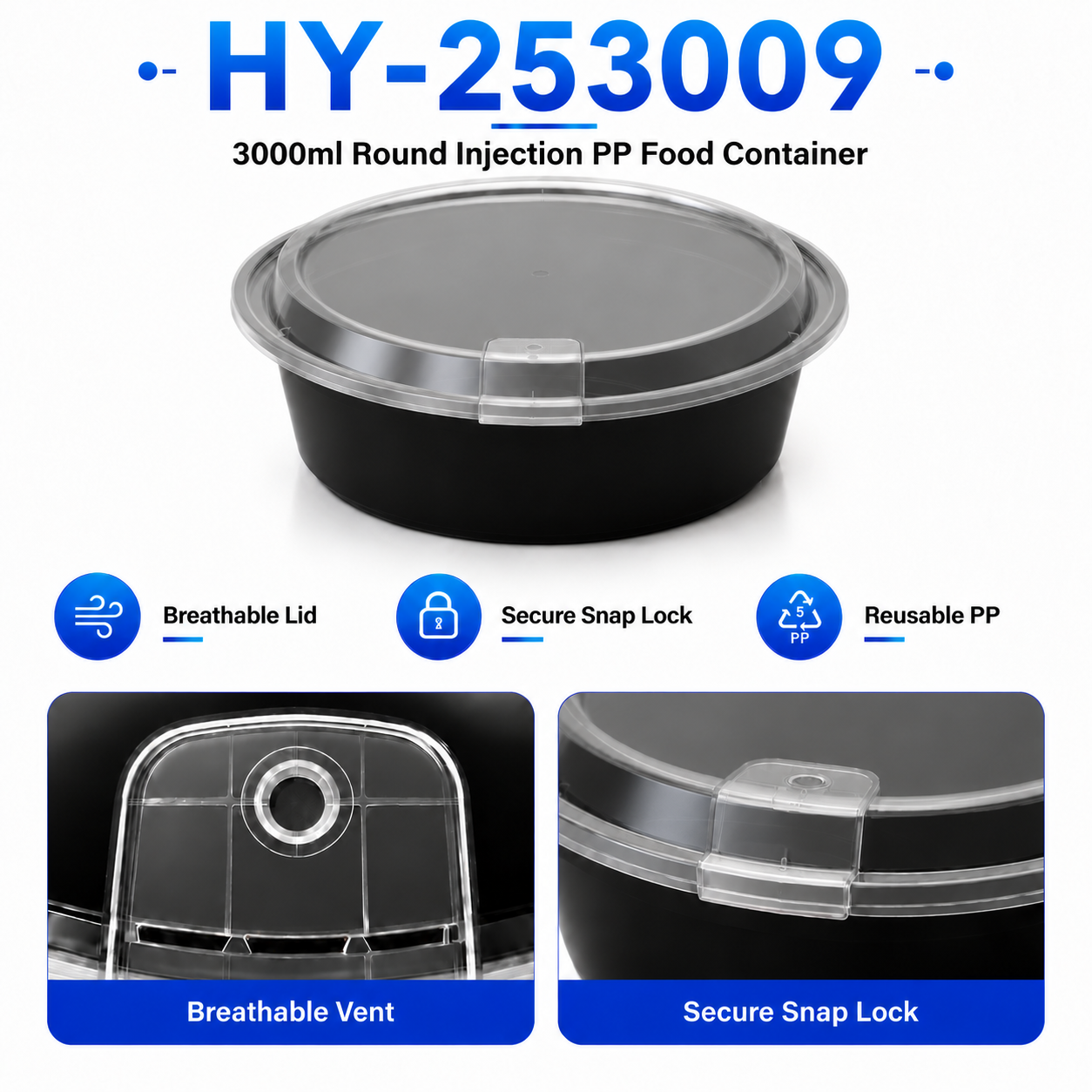
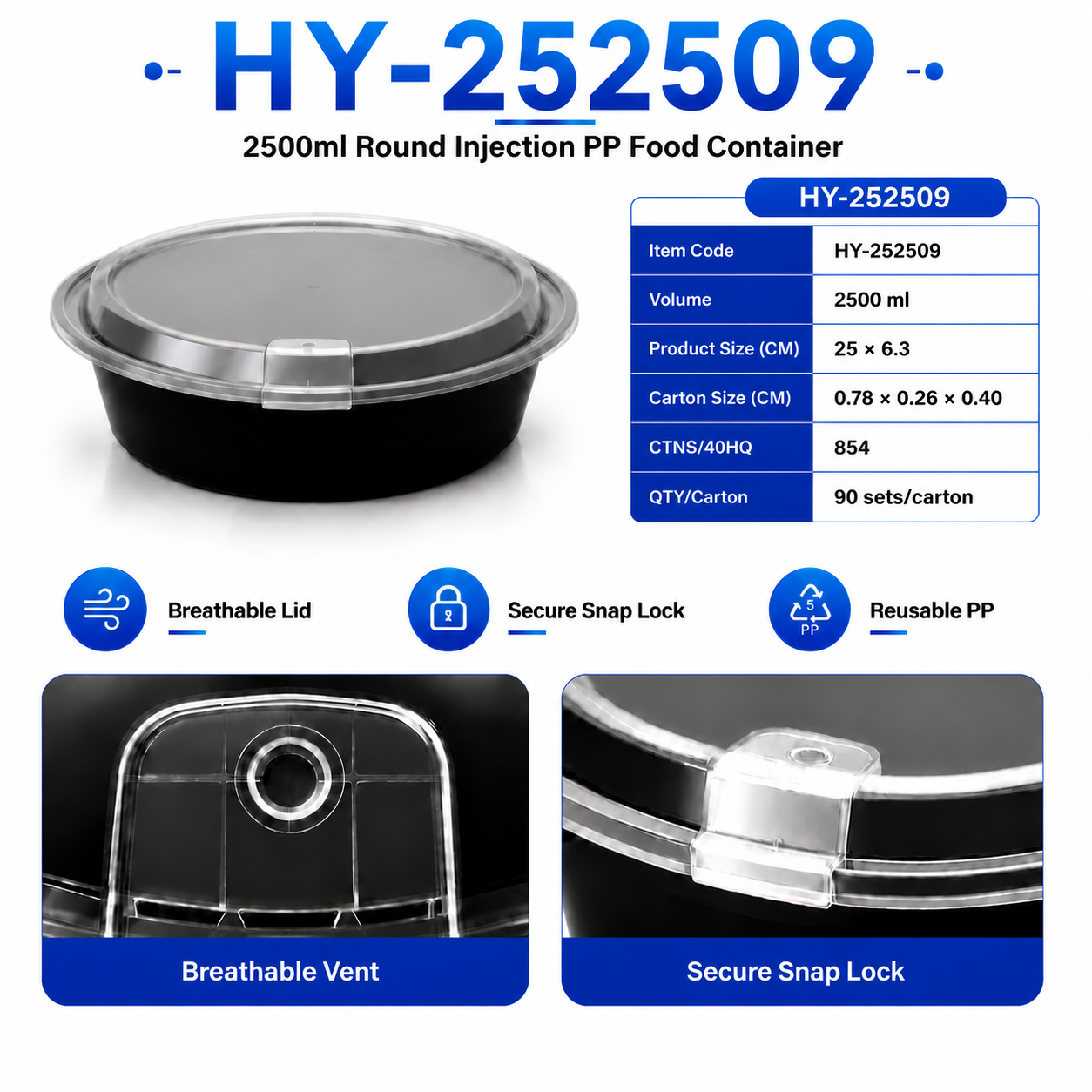
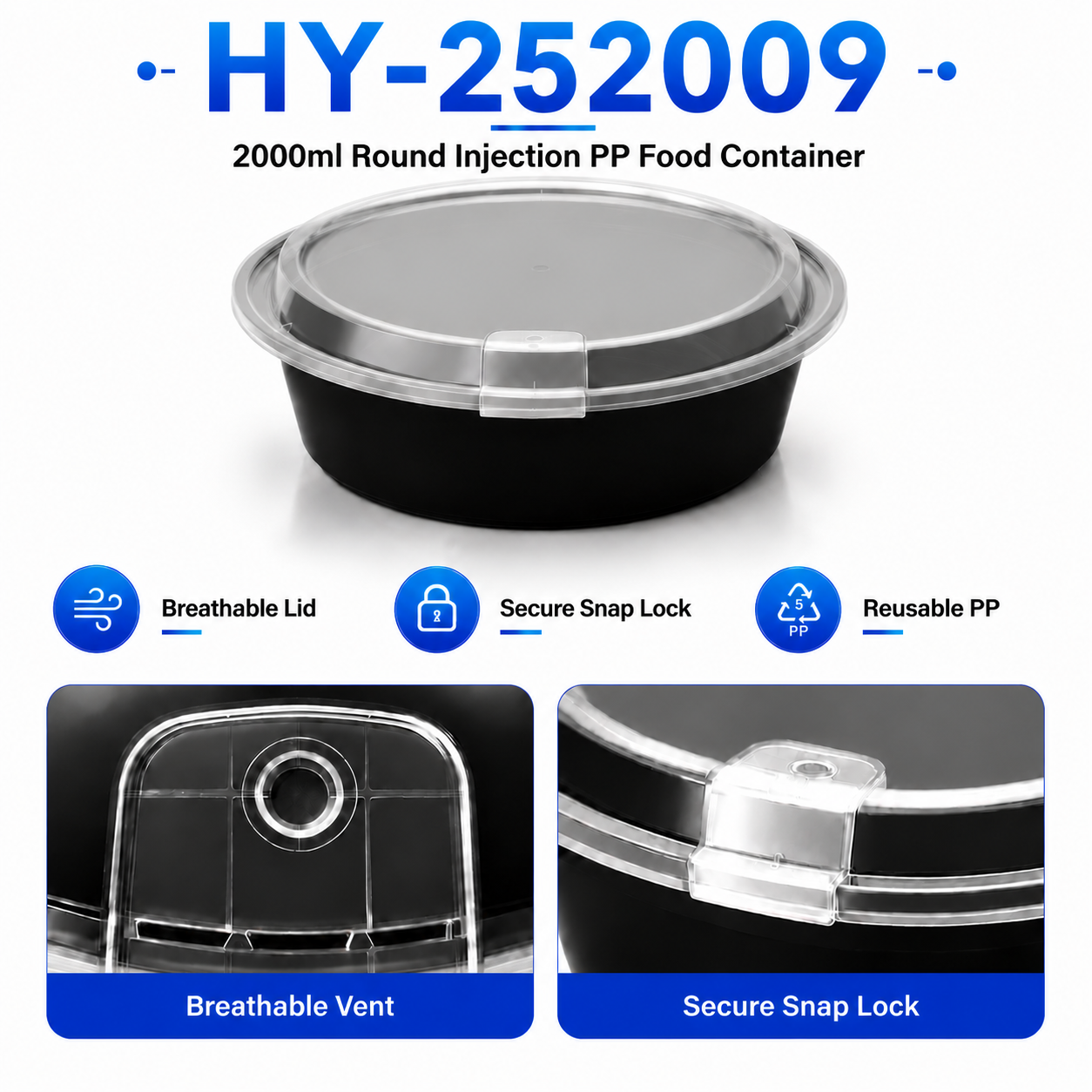
Round food containers, however, can also provide excellent stacking efficiency when the base taper and nesting structure are properly designed.
Therefore, buyers should not automatically assume that rectangular packaging always provides better logistics efficiency.
The correct comparison should be based on actual carton dimensions, packing quantity and container loading data.
Shape should also match the food application and the expectations of the target market.
Why Container Weight Still Matters
Stacking efficiency is not the only factor affecting packaging cost.
Product weight also influences material consumption and unit price.
However, reducing weight without considering performance can create other problems.
A food container still needs sufficient rigidity and strength for its intended application. Extremely lightweight packaging may deform during filling, stacking, transportation or normal foodservice handling.
The objective should therefore be optimization rather than simply using the least material possible.
A good packaging design balances material weight, structural strength, stacking efficiency, food presentation and total cost.
Custom Molds Can Improve Packing Efficiency
For large-volume projects, an existing food container may not always provide the ideal combination of size, capacity and stacking height required by a specific market.
In these situations, custom tooling can be considered.
A new or optimized mold can allow the manufacturer and buyer to adjust important features such as dimensions, depth, capacity, product weight, lid structure and stacking performance.
For buyers purchasing large quantities over a long period, improving the product structure may help increase container loading efficiency and reduce long-term logistics costs.
Before developing a new mold, the packaging supplier should evaluate the customer's existing sample, target capacity, required material, expected annual volume and transportation requirements.
Why Sample Testing Is Important
Specifications and drawings are useful, but buyers should also evaluate physical samples before confirming a large order.
Samples allow importers to test how the container performs in real conditions.
Important areas to check include lid fit, opening and closing, container rigidity, food presentation, stacking, separation between nested containers and overall dimensions.
If the buyer is replacing an existing product, comparing the new sample directly with the current packaging can also help identify differences in stacking height and storage requirements.
How Huanyu Zhongteng Supports Wholesale Buyers
Tianjin Huanyu Zhongteng Technology Co., Ltd. manufactures disposable food packaging for distributors, importers, restaurant suppliers, catering businesses and professional foodservice customers.
Our product range includes PP food containers, takeaway containers, deli containers, food trays and other food packaging solutions.
For bulk and export projects, we can provide product specifications, carton packing information, estimated container loading data and samples to help buyers evaluate products before placing an order.
OEM and ODM solutions can also be discussed for projects requiring customized product dimensions, material, weight, color, packaging configuration or tooling.
Our goal is not only to provide a food container, but to help buyers select packaging that works efficiently from production and transportation through to the final foodservice application.
Frequently Asked Questions
Can stackable food containers reduce shipping costs?
Improved stacking can reduce the volume occupied by empty containers. If this allows more pieces to be loaded into each carton or shipping container, it may reduce the freight cost allocated to each piece.
Actual logistics costs will still depend on factors such as shipping route, freight rates, carton configuration and order quantity.
What is 40HQ loading quantity?
40HQ loading quantity refers to the estimated number of cartons that can be loaded into a 40-foot high-cube shipping container under a specific packing configuration.
The actual loading quantity may vary depending on loading methods, carton dimensions and shipping requirements.
Why should I check carton dimensions before ordering?
Carton dimensions help buyers calculate storage requirements, shipping volume and container loading efficiency.
For high-volume disposable packaging, carton volume can have a significant effect on the final landed cost.
Can food container stacking height be customized?
For suitable OEM or ODM projects, container dimensions and stacking structure can be evaluated as part of mold development or product optimization.
The final design depends on capacity, material, product performance and production requirements.
Can I receive samples before placing a bulk order?
Yes. Samples can be arranged so buyers can evaluate dimensions, appearance, stacking, lid fit and general handling before confirming bulk production.
Looking for Wholesale Food Containers with Efficient Packing?
When sourcing disposable food packaging from overseas, do not compare products only by price per piece.
Consider product structure, stacking height, quantity per carton, carton dimensions and estimated container loading together.
A packaging solution that uses shipping space efficiently can provide more value across the complete supply chain.
If you are looking for stackable PP food containers, takeaway packaging or customized food packaging for wholesale distribution, contact Tianjin Huanyu Zhongteng Technology Co., Ltd.
Tell us your required container size, capacity, material, estimated quantity and target market.
We can provide suitable product specifications, packing information, samples and a quotation for your project.